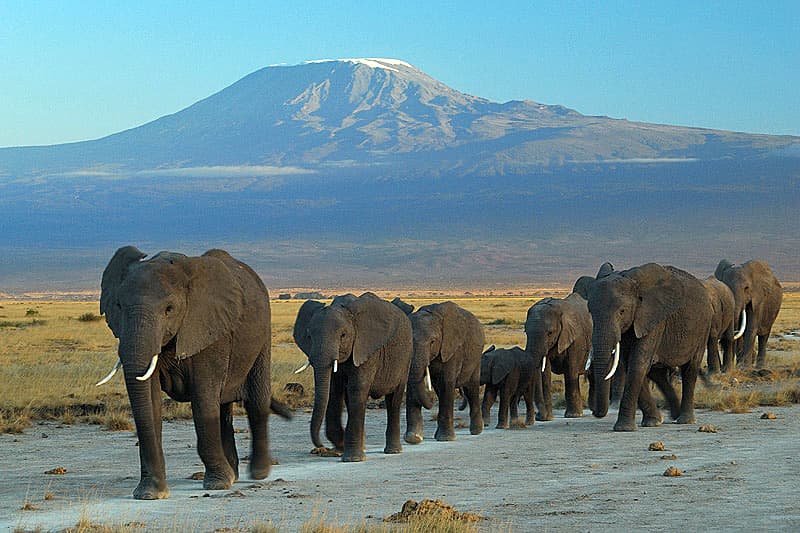
Amboseli National Park's defining image — herds of elephant moving across open plains with the snow-capped bulk of Mount Kilimanjaro rising behind them across the border in Tanzania — is one of the most recognisable safari scenes in Africa, and one of the few places where you can reliably capture it, weather permitting.
Beyond the postcard views, Amboseli is home to one of Africa's most studied elephant populations, part of a research programme running since the 1970s that has given scientists an unusually detailed understanding of elephant social structure and family bonds. The park's swampy, spring-fed core — fed by underground water from Kilimanjaro's snowmelt — supports dense wildlife concentrations even during dry seasons when surrounding areas turn to dust.
Planning an Amboseli visit
- Kilimanjaro is most visible in the early morning before cloud cover typically builds through the day.
- Observation Hill, one of the park's few walkable viewpoints, offers a panoramic overview of the swamps and plains.
- The park is roughly 4 hours from Nairobi by road, making it accessible without a flight.
- Dry season (June–October, January–February) generally offers the clearest Kilimanjaro views and best game concentrations.
For photographers in particular, Amboseli delivers one of the most reliably dramatic backdrops in African safari travel.