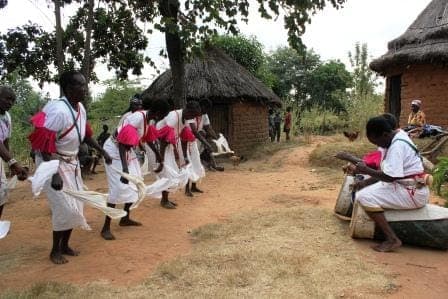
Across Kenya's many agricultural communities, traditional calendars have historically been marked less by fixed dates than by the practical rhythm of the farming season — planting, growth, harvest and fallow periods — with specific rituals and celebrations traditionally observed at key transition points, particularly around securing adequate rainfall and celebrating successful harvest, reflecting the direct, high-stakes relationship between weather, harvest success and community survival in largely rain-fed agricultural economies.
Rainmaking rituals
Rainmaking ceremonies, historically significant across numerous Kenyan communities including the Kamba's kilumi dance covered elsewhere on this blog, and various rituals documented among the Tharaka, Mbeere and other communities in Kenya's drier agricultural zones, traditionally involved specific ritual specialists, communal dance and prayer directed toward securing timely, adequate rainfall — a practice reflecting genuine practical anxiety about drought risk rather than merely symbolic ceremony, given how directly rainfall timing affected community food security.
First-fruits and harvest celebration
Harvest celebrations, traditionally marking the successful conclusion of the agricultural season, typically involved community-wide feasting, specific ritual offerings of the season's first harvested crops, and expressions of gratitude directed toward the community's supreme deity or ancestral spirits believed to have supported the successful harvest — a pattern found in some form across most of Kenya's traditionally agricultural communities, even while the specific ritual details and associated deity names vary considerably.
Modern agricultural shows and evolved tradition
Kenya's modern agricultural show circuit, covered in this blog's Nairobi ASK Show coverage, represents in some respects a modernised, secularised descendant of these traditional harvest celebration functions — bringing communities together to display and celebrate agricultural produce and achievement, even if the specific religious and ritual dimensions of traditional harvest festivals have generally given way to a more purely commercial and educational agricultural exhibition format.
Experiencing Kenya's harvest traditions
- Traditional rainmaking and harvest rituals are increasingly rare as living practices — approach any surviving observances with genuine respect for their continued significance to practising communities.
- Modern agricultural shows, covered elsewhere on this blog, offer an accessible, contemporary window into Kenya's continued strong agricultural cultural identity.
- Local museums and cultural centres increasingly document historical harvest and rainmaking ritual practice for educational purposes.
- Understanding these traditions adds valuable context to the deep cultural weight many Kenyan communities still place on agricultural success and food security.
Kenya's traditional harvest and rainmaking rituals reflect the deep, practical cultural weight agricultural communities have historically placed on weather and harvest success — a thread of genuine anxiety and gratitude woven throughout the country's traditional ritual calendar.