Marsabit National Park protects a genuinely improbable landscape: a forested volcanic mountain rising abruptly from the surrounding arid desert of northern Kenya, its higher slopes wet enough to support cloud forest fed by moisture trapped from passing weather systems — a green island entirely surrounded by some of the country's driest terrain.
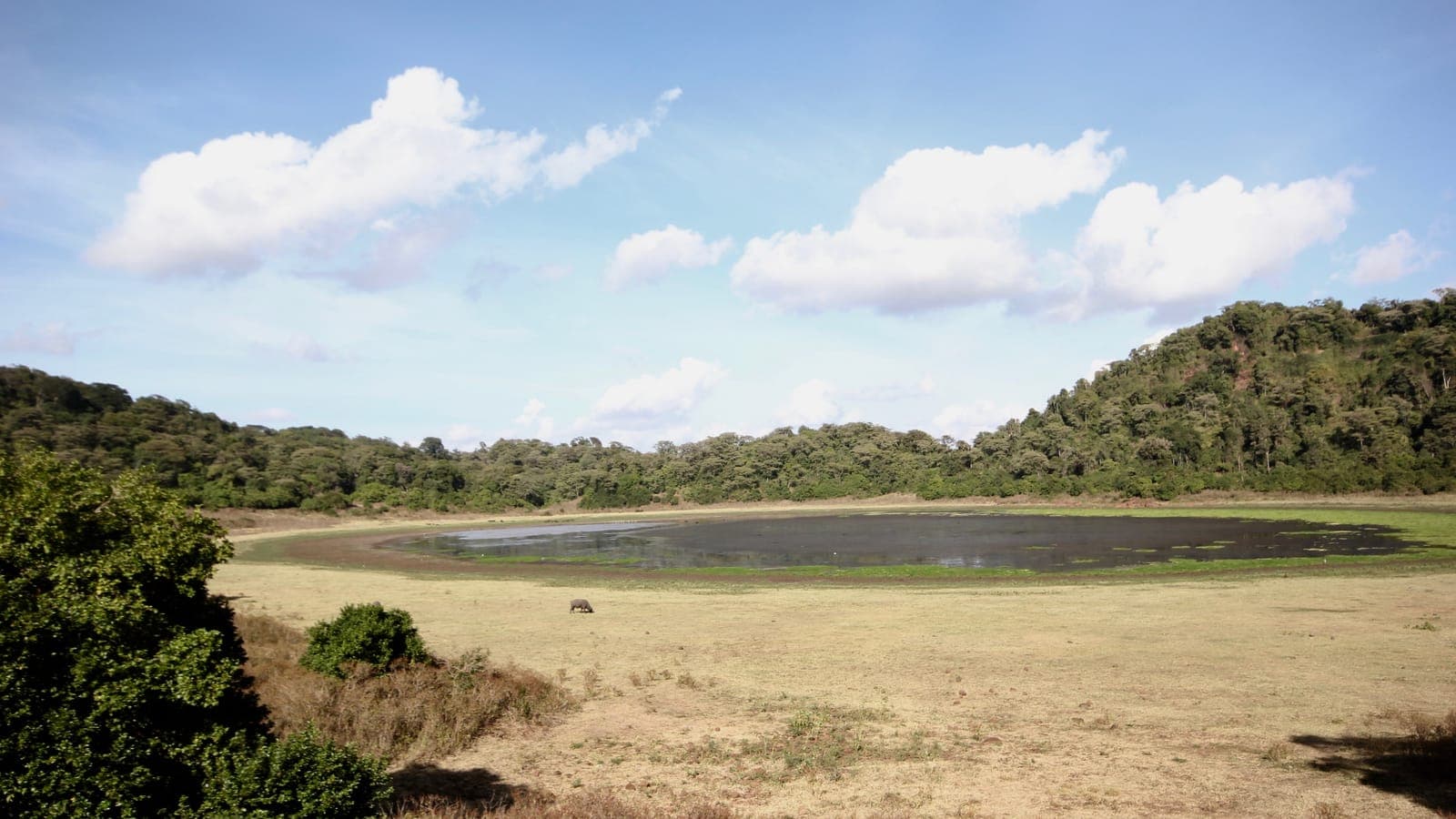
The park is historically famous for elephants with exceptionally large tusks, a genetic trait once concentrated here, along with several crater lakes including Lake Paradise, a genuinely striking crater lake ringed by forest that feels utterly disconnected from the desert landscape just a short distance away.
Visiting Marsabit
- The park's remoteness means considerably fewer visitors than Kenya's more established parks.
- Lake Paradise is one of the park's most photogenic and unexpected features.
- Marsabit town itself serves as the access point and offers basic services for travellers heading further north.
- Road access has historically been rough — check current conditions and consider a 4x4 vehicle.
For travellers seeking genuine remoteness and an ecological surprise in Kenya's arid north, Marsabit offers a landscape unlike anywhere else covered on this blog.