Across the great majority of Kenya's ethnic communities, funeral rites and ancestor veneration carry deep and consistently significant cultural weight, reflecting a widely shared belief — with community-specific variations in detail — that the deceased continue to hold an active relationship with living family members, whose obligation to honour them properly through correct burial and ongoing remembrance directly affects the family's continued wellbeing and fortune.
Burial at ancestral home
A near-universal expectation across many Kenyan communities, including the Luo, Kikuyu and numerous others covered elsewhere on this blog, is that a deceased person should be buried at their ancestral rural home rather than wherever they happened to live or die — a custom that has, on occasion, produced significant and sometimes legally contested family disputes in modern Kenya when the deceased's urban nuclear family and rural extended family disagree over burial location, particularly in cases involving inter-ethnic marriage or long-term urban residence far from ancestral land.
Extended mourning and communal obligation
Traditional funeral observance in many communities extends over multiple days, involving structured mourning periods, specific ritual roles for different family members and clan representatives, and substantial expected community attendance and material contribution (food, funds, labour) reflecting the broader communal, rather than purely nuclear-family, understanding of death and mourning obligation found across much of Kenyan traditional culture.
Specific community variations
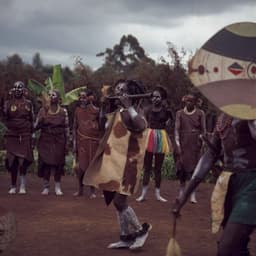
Particular communities maintain especially distinctive funeral customs — the Taita's sacred skull cave tradition, covered elsewhere on this blog, represents one of the most visually and conceptually distinctive Kenyan approaches to preserving connection with deceased ancestors, while various communities maintain specific traditional funeral dance forms (the Duruma's traditions and Giriama kifudu dance, both covered elsewhere on this blog, among them) performed specifically to honour the deceased and guide their spirit appropriately.
Modern practice and Christian/Islamic blending
Contemporary Kenyan funerals very commonly blend traditional customary elements with Christian or Islamic religious funeral rites, producing multi-element observances that might include a church or mosque service alongside traditional mourning periods, specific traditional dress, and customary post-burial rituals — reflecting the same broader pattern of religious blending found throughout Kenyan cultural practice covered elsewhere on this blog.
Understanding Kenyan funeral customs respectfully
- If invited to attend a Kenyan funeral, appropriate conservative dress and a genuine gesture of material or practical support (following local guidance on customary contribution) are generally expected and appreciated.
- Understand that funeral attendance carries strong social obligation across much of Kenyan culture — significant absences are often noted and can affect ongoing family and community relationships.
- Approach the practice of burial at ancestral homeland, and occasional associated family disputes, as reflecting a genuinely different and coherent cultural logic around death and belonging.
- Local guides or hosts can offer specific, community-appropriate guidance if you're invited to participate in or observe funeral customs.
The depth and consistency of ancestor veneration and proper burial custom across Kenya's diverse communities reflects one of the country's most widely shared cultural values, even amid otherwise enormous ethnic and religious diversity.