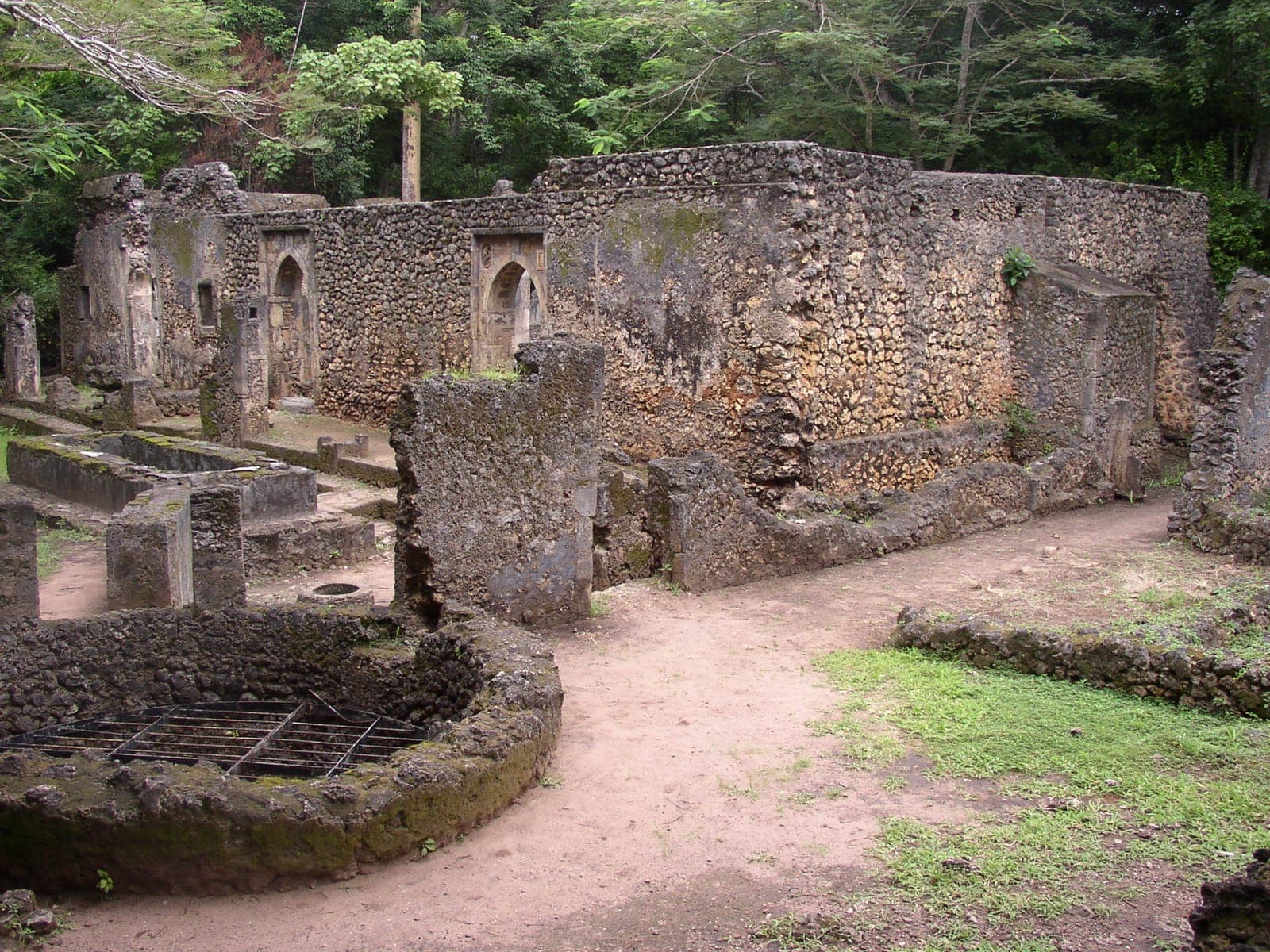
Just inland from Watamu, hidden within a patch of coastal forest, lie the Gede Ruins — the remains of a Swahili trading town that flourished from around the 13th to the 17th century before being abandoned entirely, for reasons still debated by historians. Theories range from water shortages to disease to attacks by neighbouring groups, but no single explanation has been confirmed, which only adds to the site's atmosphere.
What remains is substantial: a coral-stone Great Mosque, a palace complex, pillar tombs, and the walls of numerous houses, all now half-consumed by giant baobab and fig trees whose roots have grown directly through and around the ancient structures. Sykes' monkeys and a range of birdlife move through the forest canopy overhead, adding to the sense that nature has reclaimed the site rather than being kept neatly at bay.
Visiting Gede
- A small museum at the entrance provides historical and archaeological context before you walk the ruins.
- Local guides are available and worth hiring — much of the site's significance isn't obvious without explanation.
- The forest setting makes for excellent, atmospheric photography, especially in early morning light.
- The site is a short drive from Watamu's beaches, easily combined with a morning at the marine park.
Gede is one of the most evocative historical sites on the Kenyan coast precisely because it hasn't been heavily restored — you're walking through a genuine ruin, not a reconstruction.