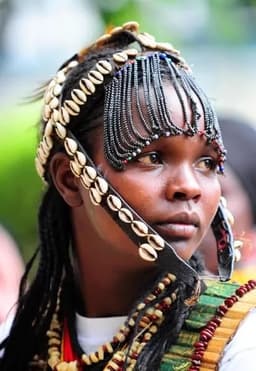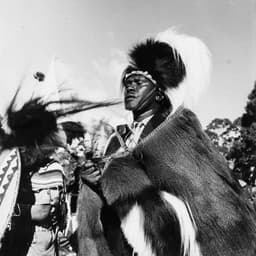
The Kamba (Akamba) are among Kenya's largest Bantu communities, settled predominantly across the semi-arid hills and plains of Ukambani — Machakos, Makueni and Kitui counties — a region with notably less reliable rainfall than the Kikuyu or Luhya highlands, which historically pushed Kamba communities toward long-distance trade and diversified livelihoods rather than relying solely on rain-fed agriculture.
Well before colonial rule, Kamba traders had established extensive long-distance trade routes connecting the interior of what's now Kenya with the coast, dealing in ivory, honey, iron goods and other commodities in a trading network that predates and, in places, outlasted European colonial trade infrastructure — a history that gave the Kamba a reputation across the region as skilled, far-travelling merchants.
Woodcarving and the Kamba craft tradition
Kamba communities are today closely associated with Kenya's wood carving industry, producing much of the country's best-known ebony and mahogany sculpture sold in curio markets nationwide, from animal figures to abstract human forms — a craft tradition that, while it draws on genuinely old carving skills, expanded significantly into its current commercial scale during the 20th century in response to tourist and export demand. Machakos and the surrounding region remain the centre of this carving economy, with workshops and cooperatives sustaining thousands of livelihoods.
Military tradition and the King's African Rifles
Kamba men were recruited in disproportionately large numbers into Britain's colonial-era King's African Rifles, developing a strong military service tradition that carried forward into independent Kenya's own armed forces, where Kamba representation in the military has historically remained notably significant relative to the community's share of the national population — a legacy directly tied to colonial recruitment patterns rather than any innate cultural predisposition, though it has become a genuine point of community identity and pride over generations.
Traditional beliefs, kilumi dance and language
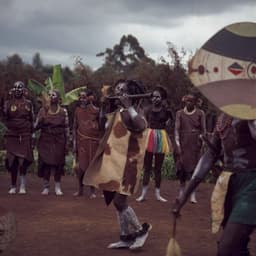
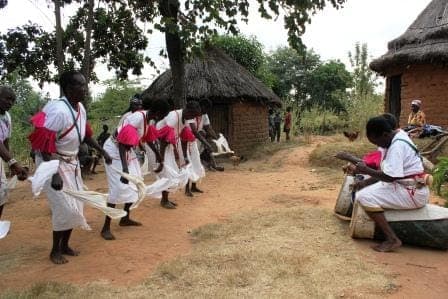
Traditional Kamba spiritual practice centred on a supreme deity, Ngai (Mulungu in some dialects), alongside ancestor veneration and traditional healers (aganga) who combined herbal medicine with spiritual practice. The kilumi, a distinctive circular dance historically associated with rainmaking rituals and healing ceremonies, remains performed at cultural events today, characterised by its driving drum rhythms and communal, trance-inducing movement. The Kikamba language, part of the Bantu family, remains widely spoken across Ukambani alongside Swahili and English.
Exploring Kamba culture and craft
- Machakos, covered elsewhere on this blog, offers the most direct access to Kamba culture, cuisine and the wood carving trade.
- Wamunyu, near Machakos, is historically the epicentre of Kenya's wood carving cooperative movement and remains an active carving centre today.
- Kitui's baobab and honey traditions, also covered separately, reflect the broader Kamba adaptation to semi-arid Ukambani conditions.
- Buying carvings directly from Ukambani cooperatives rather than tourist curio shops elsewhere supports the originating community more directly.
From ancient trade caravans to modern carving cooperatives and a strong military tradition, Kamba history reflects a community that turned the challenges of a drier, less agriculturally forgiving homeland into a legacy of trade, craft and mobility.