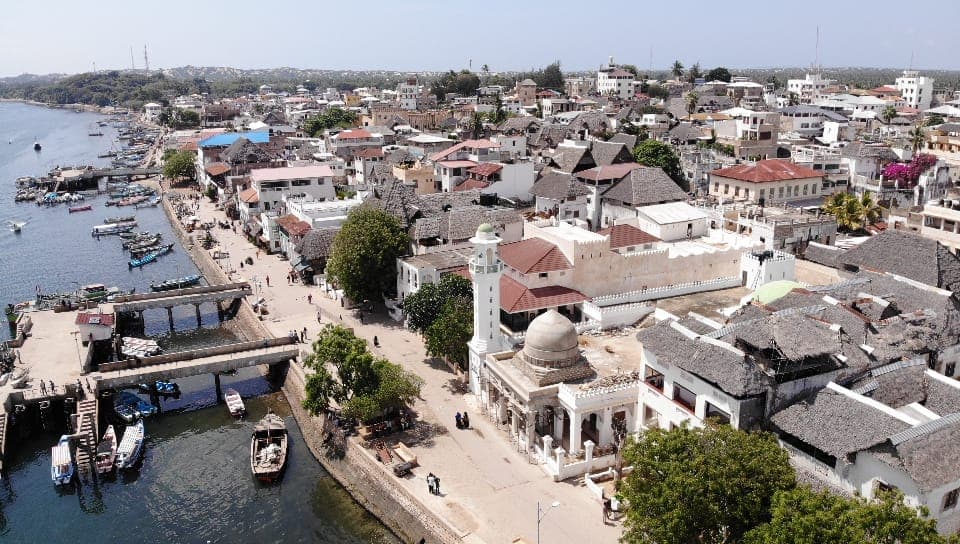
Lamu Old Town, on Lamu Island off Kenya's northern coast, is the oldest and best-preserved Swahili settlement in East Africa, continuously inhabited for over 700 years and recognised as a UNESCO World Heritage Site since 2001. Unlike Mombasa's Old Town, Lamu has no cars at all — donkeys and dhows remain the primary transport, which alone gives the town an atmosphere unlike anywhere else on the Kenyan coast.
The architecture is the headline attraction: coral-stone buildings with elaborately carved wooden doors, a Swahili craft tradition still practised by artisans in town, along with intricately decorated interior plasterwork found in some of the older houses. Narrow, shaded streets wind between buildings that have absorbed Arab, Indian, Persian and African influences over centuries of Indian Ocean trade.
What to see and do
- The Lamu Museum, housed in a converted colonial building, gives context to the town's history and Swahili culture.
- The waterfront promenade is the best place to watch dhow traffic and daily life unfold.
- The Lamu Cultural Festival, held annually, showcases traditional dhow races, Swahili poetry and dance.
- Simply getting lost in the backstreets is one of the best things to do — the town is small enough that you won't stay lost for long.
Lamu is reached by a short flight to Manda Airstrip followed by a boat transfer, or a longer road-and-ferry journey — the relative effort to get there is part of why it's stayed so unspoiled compared to more accessible coastal towns.