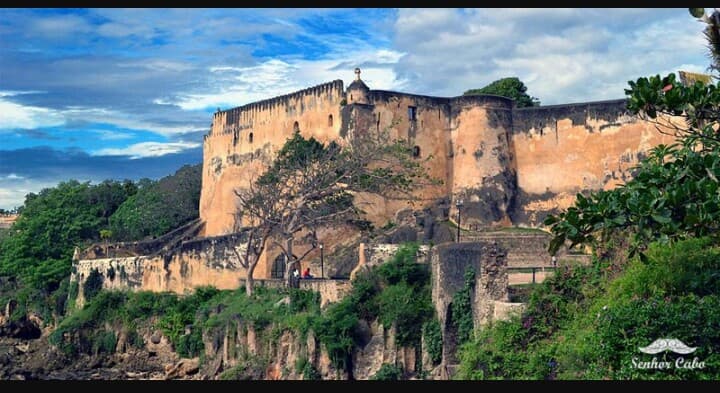
Fort Jesus dominates the entrance to Mombasa's Old Port, a coral-stone fortress built by the Portuguese in 1593 to control access to the harbour and, with it, the lucrative Indian Ocean trade routes. It changed hands repeatedly over the following centuries between Portuguese, Omani Arab and British control, and that layered history is written directly into its walls — a UNESCO World Heritage Site since 2011, and one of the best-preserved examples of 16th-century military architecture on the East African coast.
Walking the ramparts gives sweeping views over the harbour and Old Town rooftops, while the museum inside houses Ming ceramics and other trade goods recovered from shipwrecks nearby, physical evidence of Mombasa's centuries as a Swahili-Arab-Indian Ocean trading hub long before European contact.
Beyond the fort walls
Old Town itself, spreading inland from the fort, is a genuine living neighbourhood rather than a preserved museum piece — narrow streets lined with carved wooden doors in the Swahili and Omani style, balconies, mosques, and small shops selling spices, kikoys and antiques. It rewards slow, aimless walking more than a checklist itinerary.
- Hire a local guide at the fort entrance for context you'd otherwise miss in the Old Town's alleys.
- Carved doorways are a genuine architectural tradition here — look closely rather than walking past.
- Late afternoon light is best for photographing the fort and the harbour beyond it.
Combine this with Mombasa's beach areas further north for a trip that balances history with the coast's other big draw — the reason most visitors come to this part of Kenya in the first place.