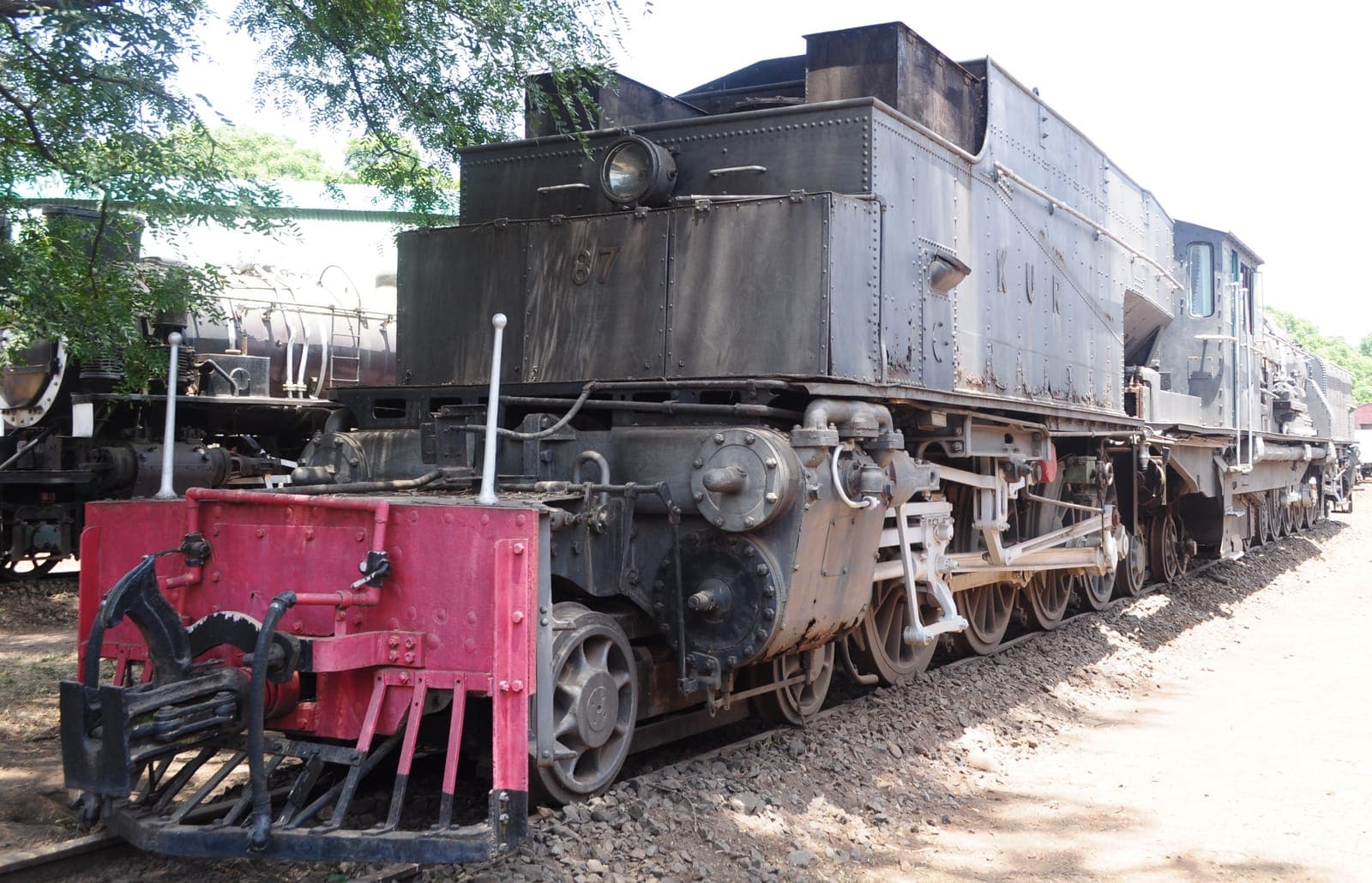
Nairobi exists, in large part, because of a railway. The Uganda Railway, derided by critics at the time as the "Lunatic Express" for its extraordinary cost and ambition, reached the site of modern Nairobi in 1899 as a supply depot, and the city grew outward from that railhead. The Nairobi Railway Museum, just south of the city centre, tells that origin story through preserved steam locomotives, carriages, and archival photographs.
Among the exhibits are carriages linked to some of the railway's more dramatic history, including artefacts connected to the notorious man-eating lions of Tsavo that killed railway workers during construction in 1898 — a story that later inspired multiple films. Vintage rolling stock sits outside in a small yard, several pieces open for visitors to climb aboard.
Why it's worth a stop
- The museum gives essential context for understanding why Nairobi exists where it does and how it grew.
- Exhibits connect directly to well-known stories like the Tsavo man-eating lions, adding narrative interest beyond static displays.
- It's a quick, low-cost stop easily combined with other central Nairobi activities.
- Rail enthusiasts will appreciate the preserved steam locomotives up close.
It's a modest museum by international standards, but a genuinely important one for understanding the specific colonial and infrastructural history that shaped modern Kenya.