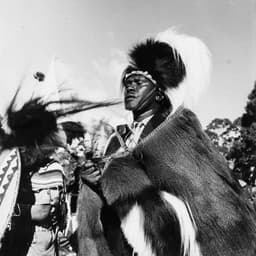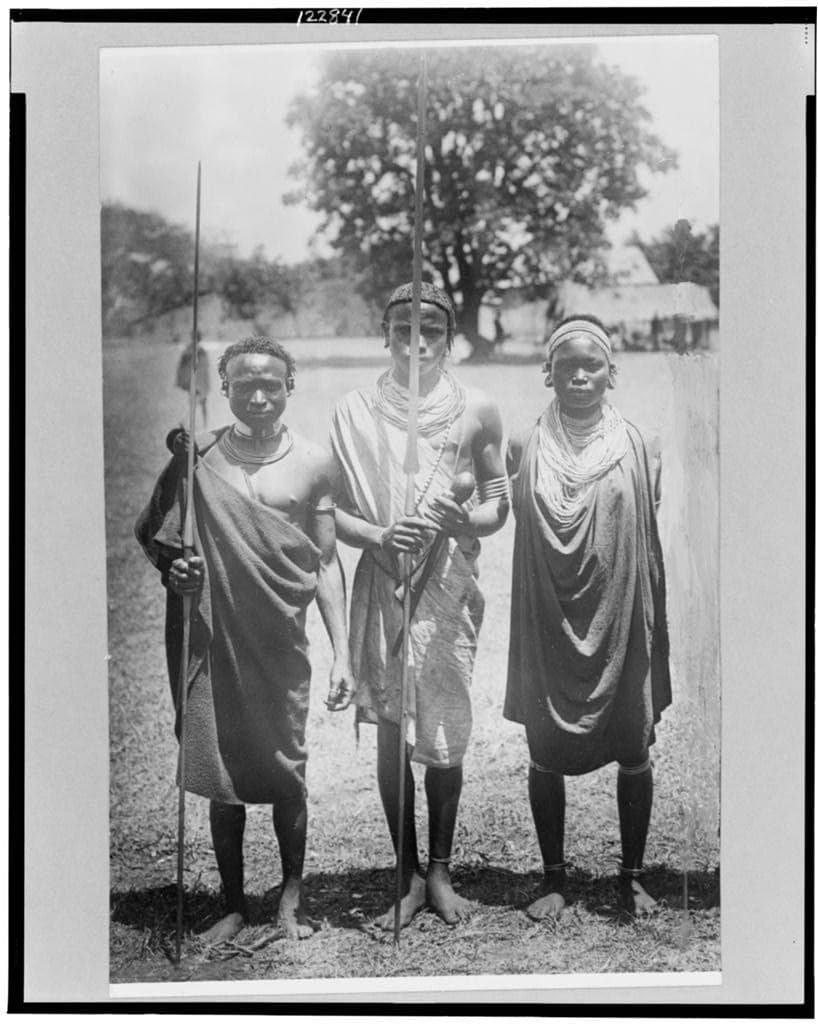
The Nandi are one of the largest and historically most prominent Kalenjin sub-groups, settled in the highlands of Nandi County in Kenya's Rift Valley. Before the broader "Kalenjin" identity consolidated in the mid-20th century, the Nandi were already a distinct and formidable political and military community in their own right, organised under a centralised ritual and military leadership role called the Orkoiyot — a hereditary spiritual and strategic leader whose authority over Nandi warriors was considerably more centralised than the decentralised elder-council systems typical of many neighbouring Bantu communities.
This military organisation produced one of the most sustained and effective armed resistances to British colonial expansion anywhere in East Africa: the Nandi Resistance, waged intermittently from the 1890s until 1905, during which Nandi warriors under the Orkoiyot Koitalel Arap Samoei repeatedly disrupted British railway construction and colonial administration in the region before Samoei was killed under a supposed truce in 1905 — an event still regarded as a betrayal in Nandi historical memory and commemorated with a national monument and annual observance.
Cattle, age-sets and the Orkoiyot institution
Traditional Nandi society, like other Kalenjin sub-groups, centred on cattle wealth and a structured age-set system governing the progression from initiation through warriorhood to elderhood. The Orkoiyot institution, while diminished as a formal political authority after the colonial period, remains a significant point of Nandi historical identity and cultural pride, distinct from the more purely elder-council-based governance found among neighbouring Kalenjin sub-groups like the Kipsigis.
Running dominance and Kapsabet
The Nandi highlands, and Kapsabet in particular (covered in this blog's nightlife coverage), have produced a remarkable concentration of world-class distance runners, forming a core part of the broader Kalenjin running phenomenon discussed elsewhere on this blog — high altitude, a strong local training culture and the same set of contributing factors identified across the Kalenjin community more broadly apply with particular force in Nandi County specifically.
Tea, land and colonial legacy
Nandi County's fertile highland climate has also made it a significant tea-growing region, with large estates established during the colonial period on land alienated from Nandi communities — a history of land dispossession that, alongside the Samoei assassination, remains a significant and still-discussed grievance in Nandi historical consciousness and occasional contemporary land-rights advocacy.
Exploring Nandi history and culture
- The Koitalel Arap Samoei Mausoleum and Museum in Nandi Hills preserves the story of the Nandi Resistance in considerable depth.
- Kapsabet, covered elsewhere on this blog, offers direct access to the region's running culture and Nandi community life.
- Local tea estates in the region welcome visitors interested in Kenya's colonial-era and modern tea economy.
- Approach the Samoei assassination and colonial land history as genuinely significant, still-resonant historical grievances rather than settled, distant history.
Among Kenya's many communities, the Nandi stand out for having mounted one of the most organised and sustained military resistances to colonial rule anywhere in the region — a history that remains central to how the community understands itself today.