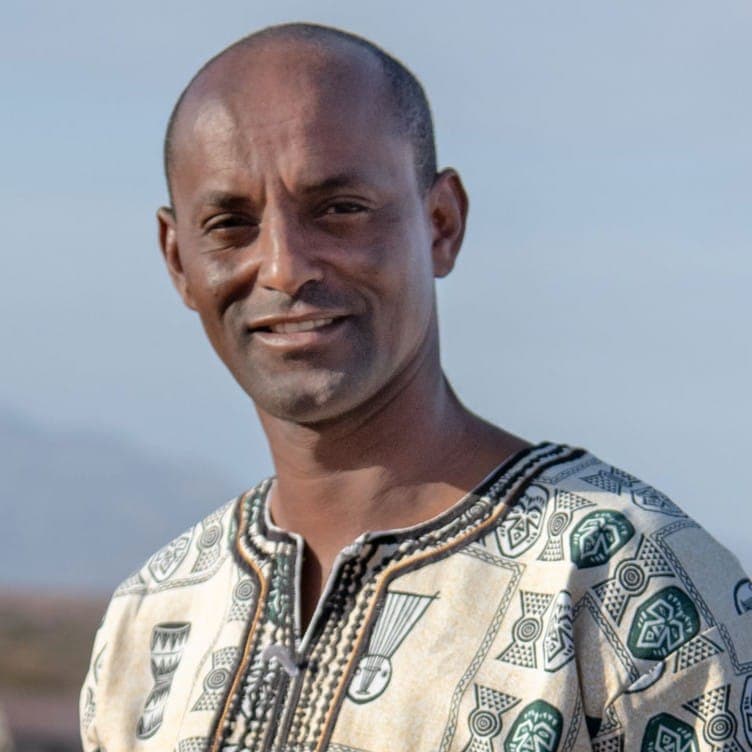
The Rendille are a Cushitic-speaking pastoralist community settled in the Kaisut Desert and surrounding arid terrain of Marsabit County in Kenya's far north, occupying one of the most consistently harsh environments inhabited by any Kenyan community, and consequently developing one of the country's most thoroughly camel-centred pastoralist cultures — camels tolerate the region's extreme aridity and sparse, thorny vegetation far better than cattle, making them the foundation of Rendille survival and social life in a way found in few other Kenyan communities outside parts of Somali and Gabra territory.
Despite their Cushitic language, distinct from the Nilotic Samburu who share much of the same northern Kenya rangeland, the Rendille have developed close historical ties with the Samburu through intermarriage, shared grazing arrangements, and mutual cultural influence over generations of proximity — producing the Ariaal, a distinct mixed Rendille-Samburu community occupying a cultural middle ground between the two parent groups, itself a fascinating example of ethnic identity formation through sustained intercommunity contact.
The camel calendar and age-set system
Rendille social organisation is structured around an elaborate age-set system with a fixed generational naming and progression cycle, historically synchronised in part with camel breeding and management cycles given the animal's centrality to community life. Circumcision marks entry into a formal age-set, with subsequent stages of warriorhood and elderhood governing social responsibility and marriage eligibility, broadly similar in underlying structure to other East African pastoralist age-set systems while incorporating Rendille-specific ritual details tied to their camel-centred economy.
Traditional dress and the distinctive doko hairstyle
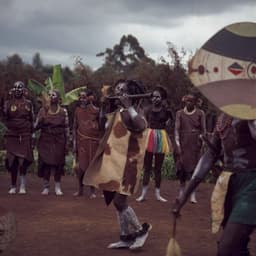
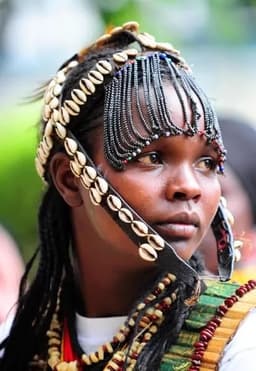
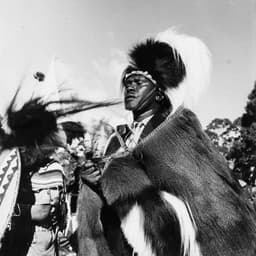
Traditional Rendille dress and adornment include distinctive beadwork, and unmarried young men traditionally wear an elaborate long hairstyle called the doko, styled with red ochre and animal fat over an extended period as a mark of their unmarried warrior status — a visually striking practice that, alongside camel herding itself, has made the Rendille a subject of ethnographic photography and documentary interest over the decades.
Survival in an extreme environment
Rendille traditional knowledge of camel husbandry, water source location, and seasonal grazing movement represents a genuinely sophisticated body of ecological adaptation, allowing sustained human habitation in a landscape that receives some of the lowest and most unreliable rainfall anywhere in Kenya — a resilience that has, nonetheless, faced increasing strain from more frequent and severe droughts linked to broader regional climate change patterns in recent decades.
Exploring Rendille culture and camel pastoralism
- Marsabit, covered elsewhere on this blog, offers a practical gateway to the wider Rendille cultural region, though the community's core territory lies in the more remote Kaisut Desert beyond.
- Engage with Rendille communities through established local guides given the region's genuine remoteness and the cultural specificity of camel-pastoralist life.
- Rendille beadwork and camel-related craft items, where available through community channels, offer meaningful, directly supportive souvenirs.
- Understanding the Ariaal as a distinct blended Rendille-Samburu community adds valuable nuance to any simple ethnic-group categorisation of the region.
The Rendille's camel-centred adaptation to one of Kenya's most extreme environments represents a genuinely remarkable feat of sustained human ecological resilience, built around one of the most demanding pastoralist lifestyles found anywhere in East Africa.