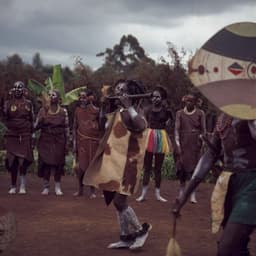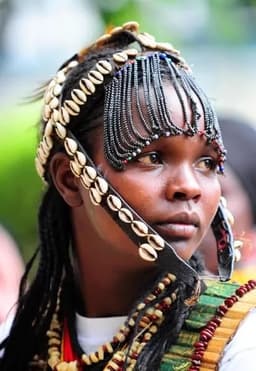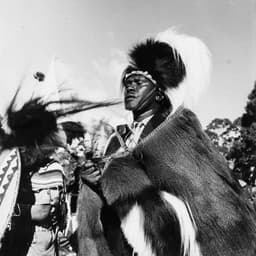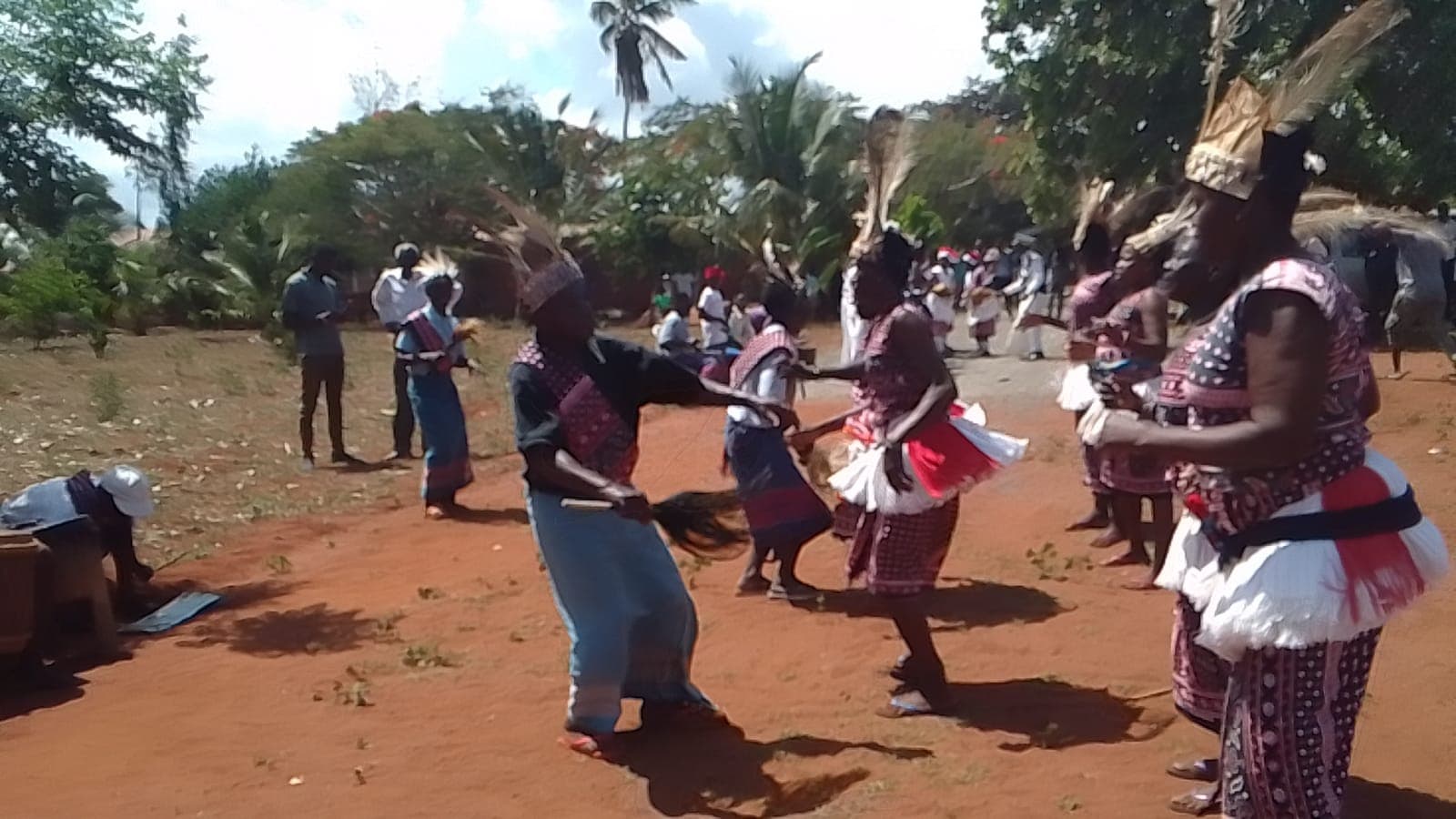
Traditional religious practice across Kenya's ethnic communities, prior to and often alongside the widespread adoption of Christianity and Islam over the past century and more, has been deeply tied to specific sacred natural sites — forests, particular trees, mountains, rock formations and water sources — believed to house ancestral spirits or serve as points of connection to a supreme deity, with dedicated ritual specialists or councils of elders traditionally responsible for maintaining appropriate access and conduct at these sites.
Mount Kenya and mountain reverence
Mount Kenya holds central spiritual significance for several Bantu communities covered elsewhere on this blog — the Kikuyu, Embu, Meru and Kamba among others — each maintaining variations of belief that the supreme deity resides on or near the mountain's peak, with traditional prayer and ritual historically oriented toward the mountain regardless of the specific community's exact settlement location relative to it. This mountain-centred reverence has proven remarkably durable, with Mount Kenya's spiritual significance referenced even in modern Kenyan Christian religious practice and national symbolism.
The Mijikenda kaya forests
The Mijikenda kaya sacred forests, covered in depth elsewhere on this blog, represent one of Kenya's most concrete and internationally recognised examples of traditional religion directly producing measurable conservation outcomes — sacred taboo against disturbing these forests has preserved some of the last fragments of Kenya's coastal forest ecosystem, a genuinely rare case where traditional spiritual belief and modern conservation science point toward the exact same practical outcome.
Sacred trees, rocks and water sources
Beyond the kaya system, individual sacred sites recur across many Kenyan communities' traditional practice — specific fig trees (mugumo among the Kikuyu) associated with community meeting and ritual functions, rock formations like Kit Mikayi near Kisumu carrying deep Luo spiritual significance, and specific springs or river sources associated with rainmaking rituals and ancestor veneration among various communities including the Tharaka and Mbeere covered elsewhere on this blog.
Coexistence with Christianity and Islam
Rather than being simply and completely replaced by Christianity and Islam's arrival, traditional sacred-site reverence has in many communities persisted alongside these introduced religions in various blended forms — some communities maintain traditional site reverence as a distinct, parallel practice to formal Christian or Islamic worship, while others have incorporated traditional sacred-site significance into locally adapted Christian practice, producing genuinely syncretic religious landscapes across much of rural Kenya.
Visiting sacred sites respectfully
- Kaya forests, Kit Mikayi and similar sites remain active sacred spaces for their associated communities — always visit with an authorised local guide and follow specific site protocols.
- Photography restrictions at sacred sites should be strictly observed where indicated by community guides.
- Approach these sites with the same respect due any active religious location, rather than treating them purely as scenic or curiosity stops.
- Local guides can often explain a site's specific traditional significance in far more depth than generic background information alone provides.
Kenya's sacred natural sites offer a genuinely tangible link to traditional religious practice that predates, and in many cases continues alongside, the country's now-dominant Christian and Islamic religious landscape.