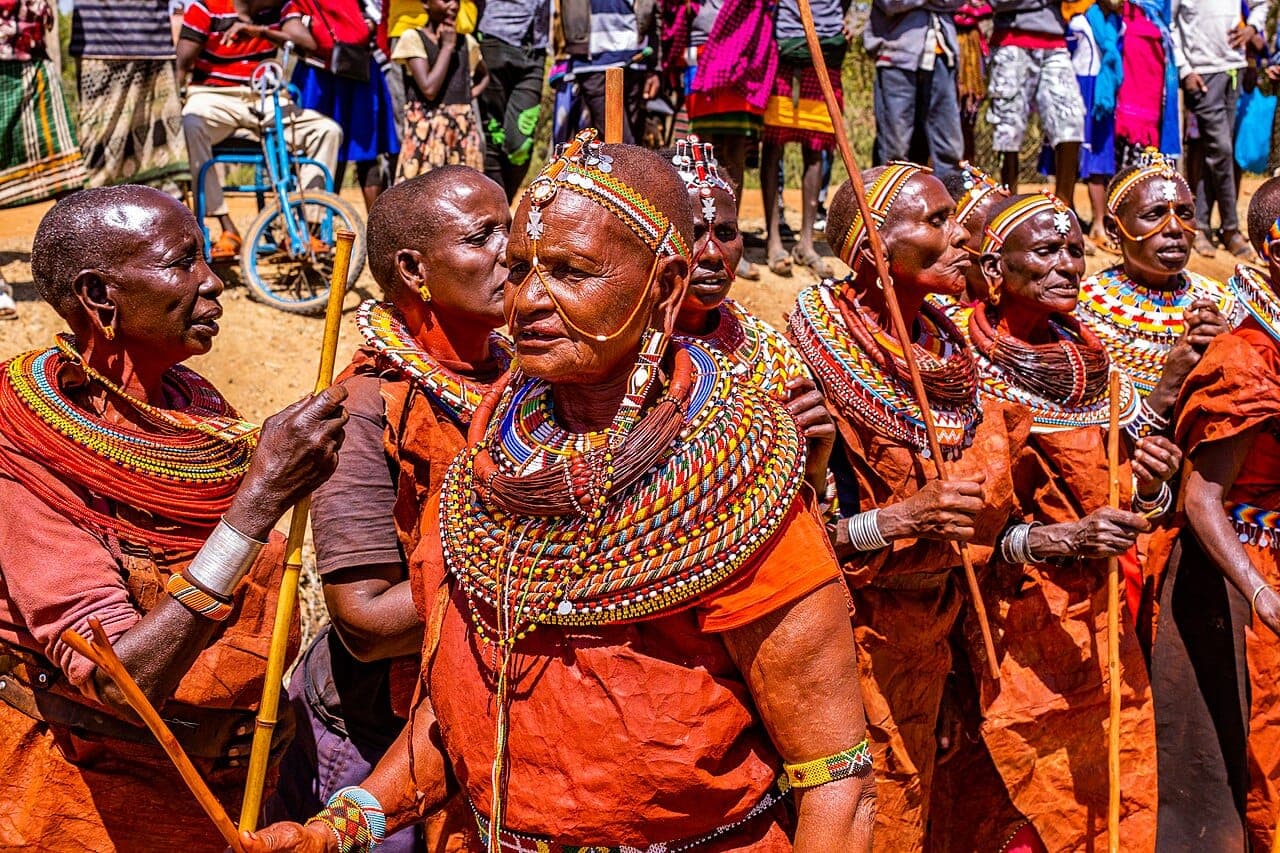
The Samburu are a Nilotic pastoralist community settled in Kenya's northern Rift Valley region, principally Samburu County, and are closely related linguistically and culturally to the Maasai — both belong to the broader Maa-speaking family and share core cultural institutions including cattle-centred wealth, an age-set warrior system, and similar beadwork and dress traditions — while having adapted their pastoralist lifestyle to the considerably more arid conditions of Kenya's north compared to the Maasai's relatively better-watered southern rangelands.
This shared Maa heritage combined with geographic separation over generations has produced a community that outside observers sometimes describe as culturally similar to the Maasai, but Samburu themselves maintain a clearly distinct identity, dialect variation, and specific local customs and ceremonies that mark a genuinely separate ethnic community rather than simply a Maasai sub-group.
Camels and adaptation to aridity
A key distinction from Maasai pastoralism is the Samburu's much heavier reliance on camels alongside cattle, goats and sheep — camels tolerate the drought and sparse vegetation of Samburu's arid rangelands far better than cattle alone, making them an increasingly central part of household livestock portfolios, particularly as rainfall patterns have grown more unpredictable in recent decades.
The moran and age-set system
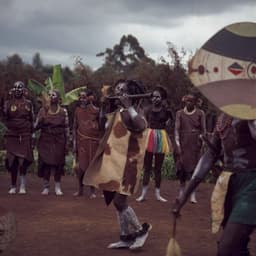
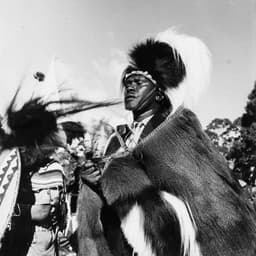
Like the Maasai, Samburu society structures male progression through an age-set system, with the moran (warrior) stage — entered through circumcision — marking an extended period, often lasting well over a decade, of communal living, cattle herding responsibility and gradual accumulation of social standing before eventual transition to elderhood and marriage eligibility. This extended moran period, longer in Samburu tradition than in many other East African pastoralist age-set systems, has historically been the subject of both cultural pride and, at times, external debate regarding its length and the delayed marriage it entails for young men.
Beadwork, dress and marriage customs
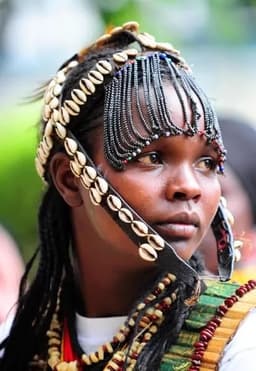
Samburu beadwork is elaborate and visually distinctive, worn by both men and women in ways that communicate age, marital status and social standing, similar in function to Maasai beadwork traditions. Marriage customs traditionally involve substantial bridewealth negotiations in livestock, and polygamy remains practised among some Samburu families, particularly among senior elders whose accumulated cattle wealth and social standing support multiple households.
Belief, ceremony and modern conservancy life
Traditional Samburu spiritual practice centres on Nkai (a variant of the Maasai Enkai), a supreme deity associated with the sky and sustaining rain, alongside ancestor respect and ceremonies marking major life transitions. In recent decades, community conservancies established across Samburu territory — discussed in this blog's coverage of Samburu National Reserve — have created new economic models blending traditional pastoralism with tourism revenue and wildlife conservation partnership.
Engaging with Samburu culture
- Samburu National Reserve and surrounding conservancies, covered elsewhere on this blog, offer the most established route to respectful cultural engagement alongside wildlife viewing.
- Village visits arranged through reputable local operators support the community directly and typically include genuine explanation of beadwork, ceremony and daily life rather than a purely staged performance.
- Approach the moran system and its extended timeline with cultural curiosity rather than judgment — it reflects a coherent internal logic tied to communal responsibility and gradual social maturation.
The Samburu's adaptation of shared Maa cultural institutions to a harsher northern environment illustrates how closely related communities can diverge meaningfully in practice while retaining a clearly shared cultural and linguistic root.