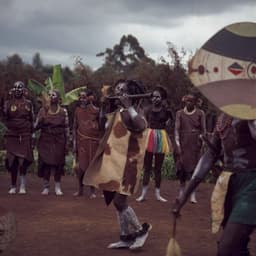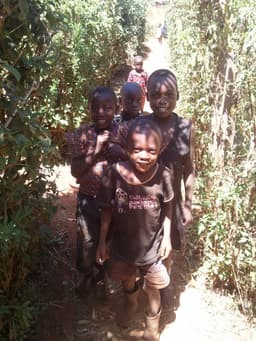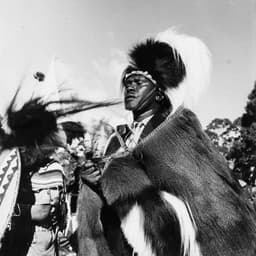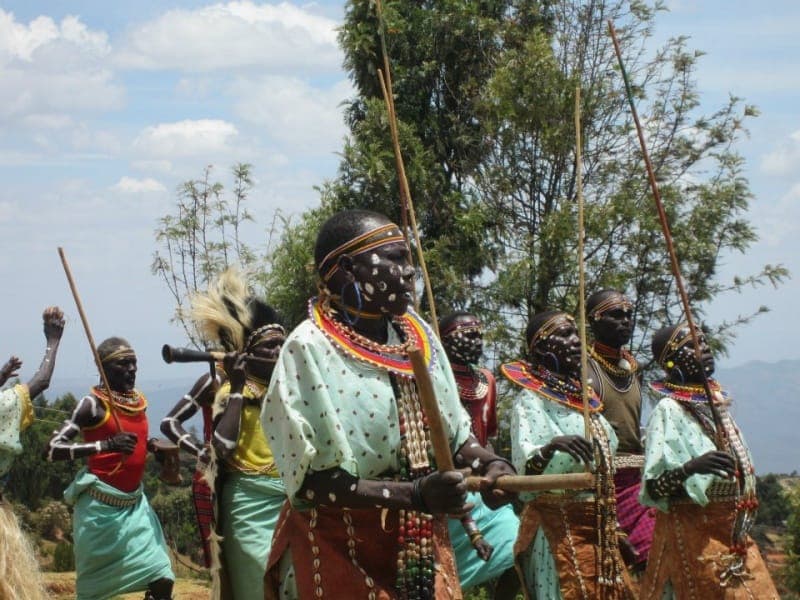
The Sengwer are a small, historically forest-dwelling community associated with the Cherangany Hills forest region in Kenya's western Rift Valley, closely related linguistically and culturally to the neighbouring Marakwet community covered elsewhere on this blog, while maintaining their own distinct identity rooted specifically in a traditional forest-based livelihood combining honey gathering, hunting and limited cultivation within the Cherangany forest ecosystem.
Like the Ogiek covered separately above, the Sengwer's traditional forest-dependent way of life has historically set them apart from the more purely agricultural or pastoralist economic patterns of most neighbouring Kalenjin communities, reflecting a broader pattern across several of Kenya's smaller indigenous communities whose identity and livelihood remain closely tied to specific forest ecosystems.
Land rights and forced eviction concerns
The Sengwer have faced significant, well-documented conflict with Kenyan forest conservation authorities over their continued presence within the Cherangany Hills forest reserve, including reported forced evictions and house-burning incidents carried out in the name of forest conservation — actions that have drawn sustained criticism from international human rights organisations and comparison to the broader pattern of indigenous forest community displacement also affecting the Ogiek, raising similar unresolved tensions between conservation policy and indigenous land rights.
Traditional forest knowledge and cultural practice
Sengwer traditional culture includes detailed ecological knowledge of the Cherangany forest's resources, alongside cultural practices and social structures sharing broad similarities with neighbouring Kalenjin communities' age-set systems covered elsewhere on this blog, while maintaining specific Sengwer traditions tied to their particular forest environment and history.
A smaller, less internationally visible case
Compared to the Ogiek's internationally significant African Court ruling, the Sengwer's land rights situation has received somewhat less international legal attention, despite facing broadly similar underlying challenges — a reflection, in part, of the community's smaller population and the case's less advanced stage in international legal processes, rather than any lesser legitimacy to the community's underlying land rights claims.
Understanding Sengwer rights and culture
- The Sengwer's situation remains an actively concerning and ongoing human rights and land policy issue in Kenya.
- Approach discussion of forest conservation policy in the Cherangany Hills with awareness of its direct impact on Sengwer communities specifically.
- Human rights organisations documenting the situation offer the most current, informed information on the community's circumstances.
- The Sengwer's case, alongside the Ogiek's, illustrates a broader pattern facing several of Kenya's smallest indigenous forest communities.
The Sengwer's ongoing struggle for secure recognition of their ancestral Cherangany forest home underscores that the Ogiek's situation, while more internationally prominent, is not an isolated case — several of Kenya's smallest indigenous communities continue to navigate genuinely difficult, unresolved land rights challenges tied to conservation policy.