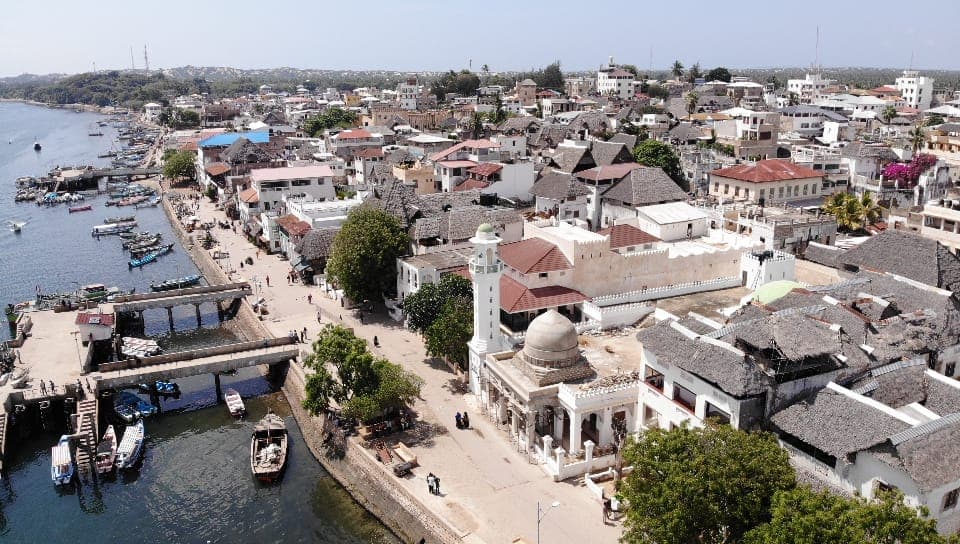
Swahili culture along the Kenyan coast represents one of Africa's most historically significant examples of sustained cross-cultural civilisation-building, blending indigenous Bantu African roots with over a millennium of trade contact and settlement from Arabia, Persia and the wider Indian Ocean world — producing a genuinely distinct coastal civilisation with its own language (Swahili, itself a Bantu language enriched with substantial Arabic vocabulary), architecture, cuisine, dress and social customs, rather than simply an African population with foreign cultural veneer or an Arab population transplanted to Africa.
Archaeological and historical evidence points to Swahili coastal city-states — including predecessors to modern Lamu, Malindi and Mombasa, all covered elsewhere on this blog — flourishing as independent trading centres from as early as the 8th to 10th centuries, engaged in extensive Indian Ocean trade networks exchanging African goods (ivory, gold, timber) for textiles, ceramics and other manufactured goods from Arabia, Persia, India and even China, well before European contact with the region.
Arab and Omani settlement and the Sultanate era
Arab, and particularly Omani, settlement and political influence along the coast intensified significantly from the 17th century onward, culminating in the Omani Sultanate of Zanzibar's direct political control over much of the Kenyan coast (including Mombasa) through the 19th century, before British colonial expansion gradually absorbed the coastal strip into what became Kenya, with a formal 10-mile coastal strip remaining under a distinct, nominally Zanzibar-linked legal status until shortly after Kenyan independence — a genuinely unusual piece of colonial-era legal geography reflecting the coast's distinct historical political trajectory from Kenya's interior.
Stone Town architecture and material culture
Swahili coastal architecture, visible in the historic centres of Lamu and Mombasa's Old Town, reflects this blended heritage directly — coral-stone construction techniques, elaborately carved wooden doors incorporating both African and Arabic-Islamic decorative motifs, and courtyard house layouts adapted from Arabian and Persian domestic architectural traditions to the specific coastal climate and available building materials.
Language, poetry and Islamic scholarship
Swahili, now Kenya's national language alongside English and spoken as a lingua franca across much of East Africa, originated specifically as this coastal Bantu-Arabic blended language, and the coast's centuries-old tradition of Swahili classical poetry and Islamic scholarship, particularly strong historically in Lamu, represents one of East Africa's most significant intellectual and literary traditions, distinct from and predating much of the region's colonial-era and post-independence literary output in English.
Exploring Swahili-Arab coastal heritage
- Lamu Old Town and Mombasa's Old Town, both covered extensively elsewhere on this blog, offer the most concentrated architectural and cultural access to this blended heritage.
- Fort Jesus in Mombasa, also covered elsewhere on this blog, sits at the literal crossroads of this coastal civilisation's Portuguese, Omani and British colonial contestation history.
- Swahili cuisine, blending African, Arabic, Indian and Persian influences, is one of the most direct and enjoyable ways to experience this cultural fusion.
- Approach Swahili identity as a genuinely distinct, unified coastal civilisation rather than simply "Arabised Africans" or "Africanised Arabs" — it is neither, but its own coherent cultural tradition.
Few cultural regions anywhere in Africa demonstrate as clear and sustained a record of genuine, centuries-deep civilisational fusion as Kenya's Swahili coast — a living culture built from Indian Ocean trade contact rather than colonial imposition, predating European involvement in the region by the better part of a thousand years.