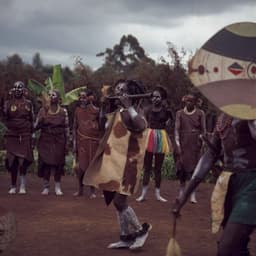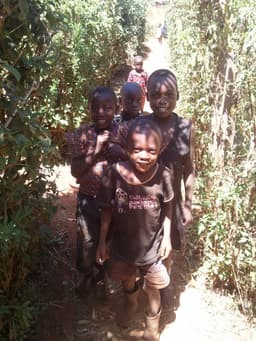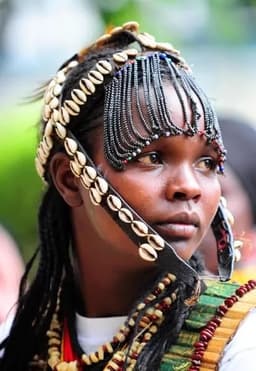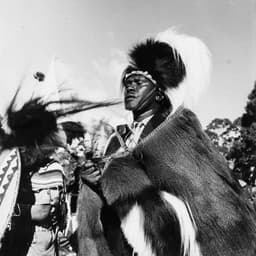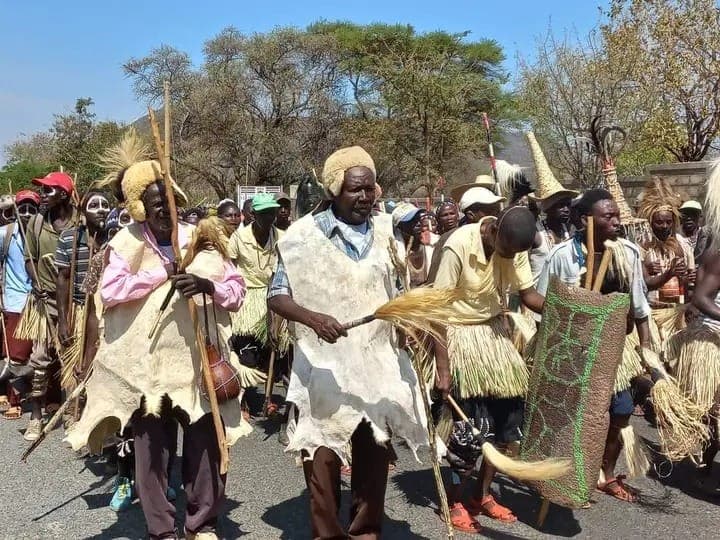
The Tharaka are a Bantu community closely related to the Meru, settled in Tharaka-Nithi County on Mount Kenya's eastern fringe, occupying a transitional zone where the mountain's fertile, well-watered slopes give way to considerably drier plains extending toward Kenya's semi-arid eastern region. This transitional position has shaped a Tharaka livelihood pattern more drought-adapted than that of their higher-altitude Meru neighbours, combining livestock keeping with cultivation of drought-resistant crops like sorghum, millet and cassava alongside more typical highland staples where rainfall allows.
The Tharaka language and broader cultural framework are closely related to Kimeru, and the two communities share significant historical and social ties, though the Tharaka maintain a distinct ethnic identity, dialect variation, and specific adaptations reflecting their drier home territory.
Traditional shrines and sacred sites
Tharaka traditional spiritual practice includes reverence for specific sacred sites and shrines associated with rainmaking rituals and ancestor veneration, reflecting the community's practical historical preoccupation with securing adequate rainfall in a genuinely marginal agricultural environment — rainmaking ceremonies and associated traditional practices held particular cultural weight given the direct, high-stakes relationship between rainfall and community survival in this drier zone.
Traditional beekeeping and honey production
Like several other communities adapted to semi-arid conditions across Kenya, the Tharaka have a strong traditional beekeeping culture using hollowed-log hives suited to the region's acacia and other dryland vegetation, producing honey that forms both a traditional dietary staple and an increasingly commercialised cash product connecting to broader initiatives promoting Kenyan dryland honey production.
Age-sets and circumcision traditions
Tharaka social organisation, similar to the Meru, structures male progression through age-sets marked by circumcision, with councils of elders handling community governance, land and dispute matters — a broadly consistent pattern with the wider Mount Kenya Bantu cultural region, adapted to the community's specific drier territory and its particular subsistence challenges.
Exploring Tharaka culture and territory
- Tharaka-Nithi County offers a genuinely less-visited alternative approach to the wider Mount Kenya cultural region, distinct from the more heavily touristed Nyeri and Meru approaches.
- Local honey producers and cooperatives in the region offer insight into the community's traditional and increasingly commercialised beekeeping economy.
- Traditional shrine sites should be approached with appropriate respect and, where possible, through local community guidance.
- The transitional highland-to-dryland landscape itself offers an interesting geographic and ecological complement to the wetter Mount Kenya slopes covered elsewhere on this blog.
The Tharaka's adaptation to Mount Kenya's drier eastern fringe illustrates the considerable ecological and livelihood diversity that exists even among closely related Bantu communities sharing the same broader mountain region.