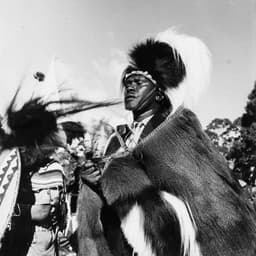
The Tugen are a Kalenjin sub-group settled primarily in the rugged Tugen Hills of Baringo County, a dramatic escarpment landscape overlooking the Kerio Valley and the Rift Valley floor, considerably more arid and topographically challenging than the well-watered Kericho and Nandi highlands further south. Traditional Tugen livelihood combined pastoralism on the hill slopes with limited cultivation in the more sheltered valleys, adapted to a landscape that offers less reliable rainfall than other Kalenjin territories.
Despite being one of the smaller Kalenjin sub-groups by population, the Tugen achieved outsized national political significance through Daniel arap Moi, Kenya's second president, who governed the country for 24 years (1978–2002) — the longest presidential tenure in Kenyan history — and whose Tugen heritage brought sustained national political attention and government investment to Baringo County during his time in office, a legacy still visibly discussed in the region's development history.
Traditional life in the Tugen Hills
Traditional Tugen society organised through the same broad Kalenjin age-set and elder-council structures found among neighbouring sub-groups, with cattle wealth central to social status and marriage negotiations, adapted to the specific challenges of a hill-and-valley landscape that required careful management of scarce water and grazing resources across seasonal cycles.
Geology, honey and traditional beekeeping
The Tugen Hills and surrounding Kerio Valley region hold significant palaeontological and geological importance, having yielded important early hominid fossil discoveries that contribute to the broader story of human evolution research in Kenya's Rift Valley. Traditional beekeeping using hollowed-log hives remains an important supplementary livelihood in parts of Tugen territory, similar to practices found among other Kenyan communities adapted to semi-arid highland-valley terrain.
Kabarnet and the Kerio Valley
Kabarnet, the Tugen heartland's main town and Baringo County's administrative centre, covered in this blog's nightlife coverage, sits dramatically perched on the edge of the Tugen Hills escarpment with sweeping views down into the Kerio Valley — one of the more visually striking town settings anywhere in Kenya's Rift Valley highlands.
Exploring Tugen culture and the Tugen Hills
- Kabarnet, covered elsewhere on this blog, offers dramatic escarpment views alongside access to Tugen cultural and political history.
- The Kerio Valley below the hills connects to Lake Baringo, also covered elsewhere on this blog, forming a natural extended itinerary through the region.
- Local museums and cultural sites in Baringo County increasingly incorporate discussion of both Tugen traditional culture and the community's modern political significance.
- The region's palaeontological sites, while less internationally famous than Lake Turkana's, hold genuine scientific significance worth understanding.
The Tugen illustrate how a relatively small ethnic community can achieve significant national historical influence through political leadership, while maintaining a distinct highland pastoralist culture shaped by one of the Rift Valley's more dramatic landscapes.